


Hair Transplant Recovery in Dubai – Day-by-Day Healing Guide (2025 Updated)
Introduction
Hair transplant procedures in Dubai have become increasingly popular due to advanced medical technologies and world-class specialists. However, while the procedure itself is important, the recovery phase plays an equally critical role in achieving successful and long-lasting results. For this reason, understanding the healing process day by day helps patients stay confident, prepared, and stress-free.
In this updated 2025 guide, you will discover exactly what to expect during hair transplant recovery in Dubai, from the first day after surgery until the final results appear.
Day 1: Immediately After the Hair Transplant
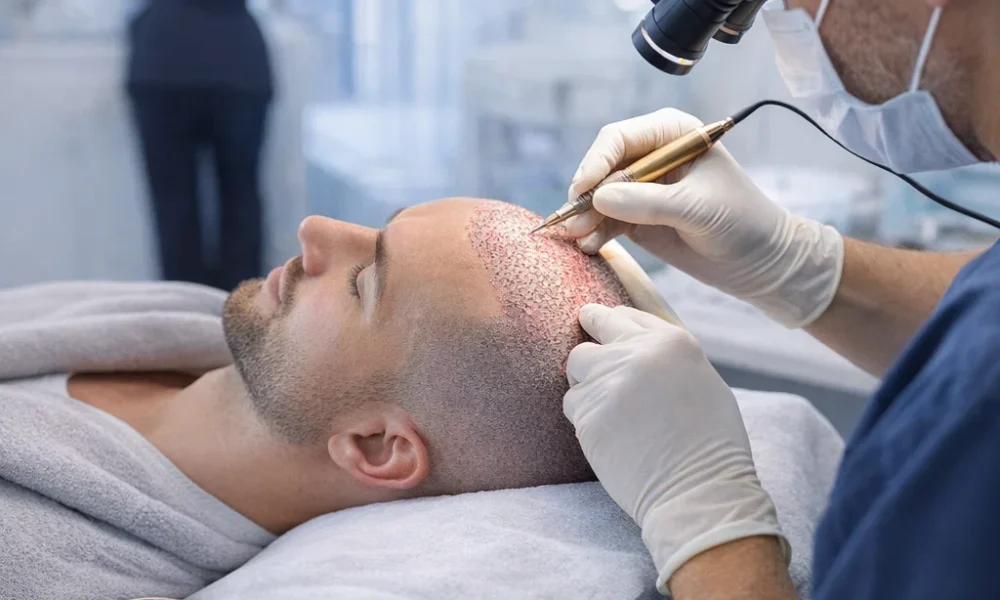
On the first day, patients usually leave the clinic just a few hours after the procedure. At this stage:
- Mild swelling or tightness in the scalp may occur.
- Tiny grafts are clearly visible in the transplanted area.
- A medical cap or light dressing protects the scalp.
Most importantly, patients should avoid touching the grafts. Additionally, sleeping with the head elevated helps reduce swelling. By following these steps, the healing process begins smoothly.
Days 2–3: Normal Swelling Phase
During the second and third days, some changes appear:
- Mild swelling may move toward the forehead or eyes.
- Slight redness becomes more noticeable.
- Itching may begin around the transplanted area.
Although these symptoms may seem uncomfortable, they are completely normal. Moreover, using cold compresses and prescribed medications significantly reduces discomfort.
Days 4–7: Early Healing and Stability
As the first week progresses, the scalp starts to stabilize. During this period:
- Swelling gradually disappears.
- Small scabs form around the grafts.
- The first gentle medical wash usually takes place.
At the same time, patients should avoid sun exposure, heavy exercise, and swimming. Consequently, the transplanted follicles remain protected during this sensitive phase.
Week 2: Scab Removal and Shedding Phase
In the second week, recovery enters an important stage:
- Scabs fall off naturally.
- Transplanted hair begins to shed, known as shock loss.
- The scalp starts to look more normal.
Although hair shedding may cause concern, it is actually a positive sign. In fact, the follicles remain healthy beneath the skin and prepare for new growth.
Weeks 3–4: Resting Phase
During this period:
- Redness continues to fade.
- Hair growth appears minimal.
- The scalp feels almost normal again.
Nevertheless, patients should continue following a healthy diet and hair care routine. As a result, the scalp creates an ideal environment for upcoming hair growth.
Months 2–3: Early Hair Growth Begins
At this stage, visible progress finally starts:
- New hair begins to emerge slowly.
- Hair initially appears thin and soft.
- Growth occurs unevenly across the scalp.
However, patience is essential. Over time, the hair thickens naturally. Furthermore, regular follow-ups with the clinic help ensure optimal results.
Months 4–6: Noticeable Improvement
Between the fourth and sixth months:
- Hair density improves significantly.
- Gaps gradually fill in.
- Styling becomes easier and more natural.
As a result, many patients experience a noticeable boost in confidence and satisfaction.
Months 7–12: Final Results Appear
By the end of the first year:
- Around 90–100% of transplanted hair has grown.
- Hair texture matches natural hair perfectly.
- Cutting, shaving, and coloring become completely safe.
At this point, the recovery journey reaches its successful conclusion.
Essential Tips for Faster Recovery
To ensure the best outcome, patients should:
- Follow the surgeon’s instructions carefully.
- Avoid smoking and alcohol for at least one month.
- Stay hydrated and eat nutrient-rich foods.
- Use only prescribed shampoos and products.
- Reduce stress and maintain proper sleep habits.
By doing so, the healing process becomes faster and more effective.
Why Choose Dubai for Hair Transplant Recovery?
Dubai offers several advantages, including:
- Cutting-edge hair transplant technologies.
- Internationally certified surgeons.
- Personalized aftercare programs.
- High medical safety and hygiene standards.
Therefore, patients benefit not only from excellent procedures but also from exceptional recovery support.
Conclusion
In conclusion, hair transplant recovery is just as important as the procedure itself. When patients understand each recovery stage and follow proper aftercare instructions, the results become more natural, dense, and long-lasting.
If you are planning a hair transplant in Dubai in 2025, this guide provides everything you need to feel confident and fully prepared throughout your healing journey.
Painless Hair Transplant Sessions in UAE
Painless Hair Transplant Sessions in UAE: Everything You Need to Know Although dealing with hair loss can be stressful, recent.
Read More
The Role of PRP Therapy in.
What Is PRP Therapy? Platelet-Rich Plasma (PRP) therapy involves extracting platelets from your blood and injecting them into areas of.
Read More